Category Archives: Book Summaries

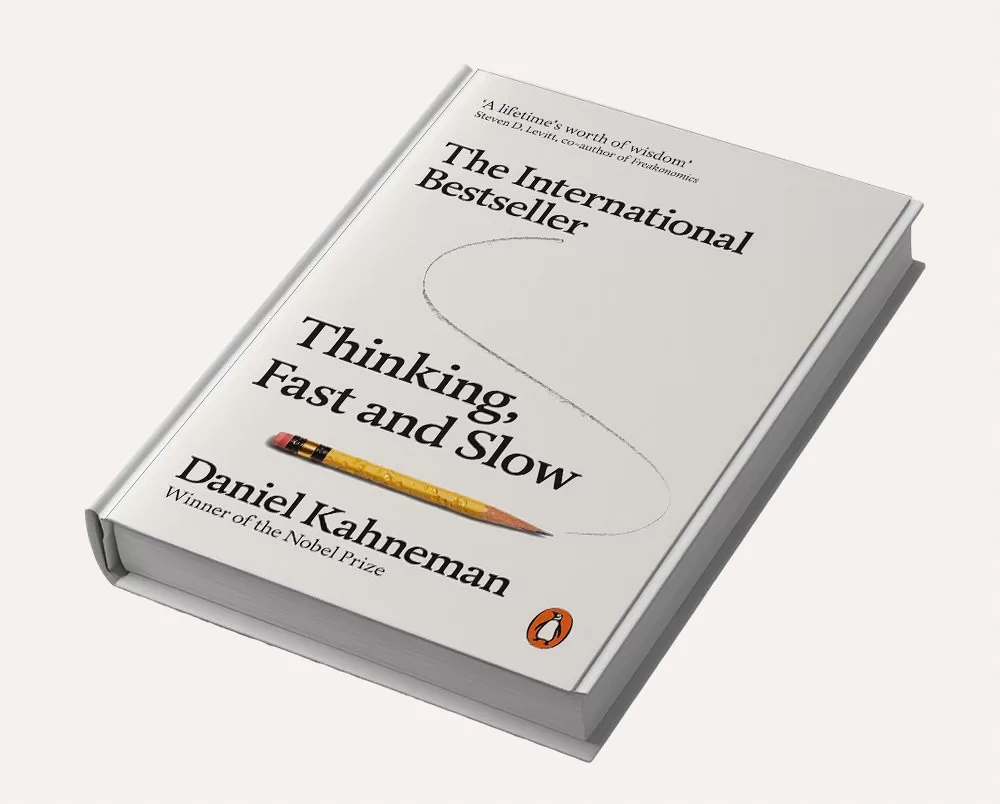
Thinking, Fast and Slow by Daniel Kahneman : Book Summary

What This Book Is About

Thinking, Fast and Slow reveals how our minds actually work through the groundbreaking concept of two distinct thinking systems. Nobel Prize-winning psychologist Daniel Kahneman shows that System 1 (fast, automatic, intuitive) runs most of our mental life, while System 2 (slow, deliberate, analytical) is often too lazy to intervene—even when System 1 makes predictable errors.

What You’ll Get From Reading This:

  • Understanding why you make irrational decisions despite being smart
  • Recognizing systematic biases that affect your judgment in relationships, career, money, and health
  • Tools to catch yourself before making costly mistakes
  • Insight into why other people behave in seemingly irrational ways
  • A framework for improving decision-making in high-stakes situations
  • Scientific grounding for why willpower, planning, and behavior change are harder than they seem

This isn’t just theory—Kahneman’s decades of research have transformed economics, medicine, public policy, and business strategy. The book translates complex psychology into practical wisdom you can use immediately.


PART 1: The Two Systems & Mental Shortcuts (Chapters 1-17)

Core Concept: How Your Mind Actually Works

Kahneman introduces the two-system framework that explains human thinking:

System 1 operates automatically and quickly, with little effort and no sense of voluntary control. It’s your autopilot—detecting simple relations, completing phrases (“bread and…”), reading emotions on faces, driving on empty roads, and making snap judgments. System 1 evolved to keep us alive by reacting instantly to threats and opportunities.

System 2 allocates attention to effortful mental activities, including complex computations, conscious choices, and deliberate focus. It activates when you’re solving 17 x 24, parking in a tight spot, or making important life decisions. System 2 thinks it’s running the show, but mostly it just endorses System 1’s suggestions.

The problem? System 2 is lazy. It requires real energy (literally—glucose consumption in the brain), so we avoid using it whenever possible. System 1 runs continuously in the background, jumping to conclusions, while System 2 only occasionally checks its work.

Continue reading Thinking, Fast and Slow by Daniel Kahneman : Book Summary
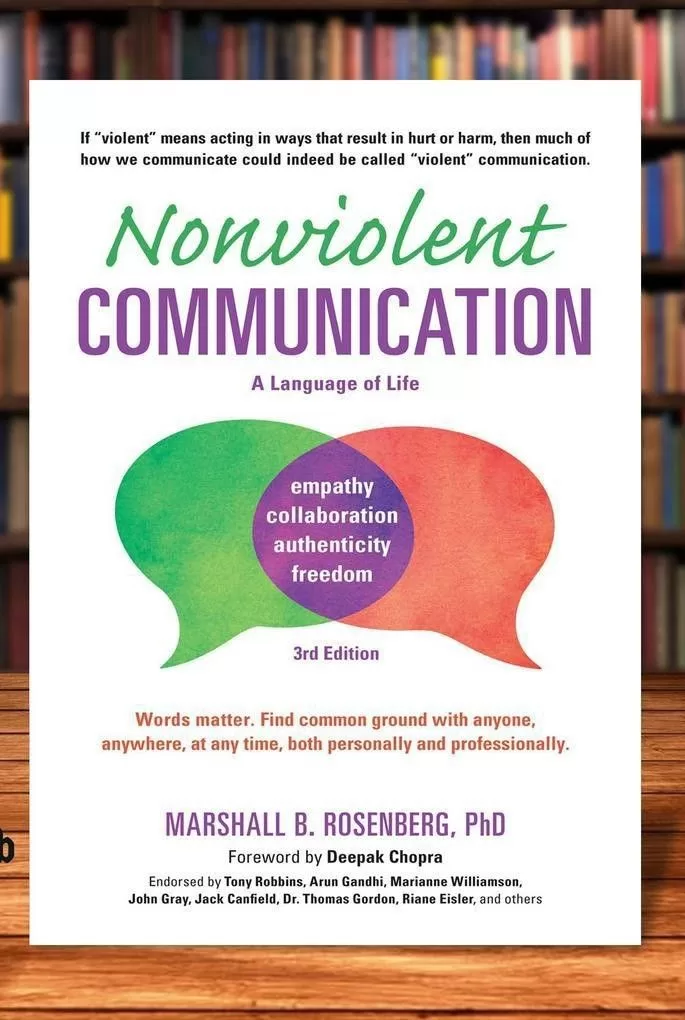
Nonviolent Communication by Marshall Rosenberg: Book Summary


What This Book Is About

Nonviolent Communication (NVC) presents a revolutionary approach to human connection that transforms how we speak, listen, and resolve conflicts. Marshall Rosenberg’s framework replaces habitual patterns of judgment, criticism, and demands with a compassionate process that meets everyone’s needs.

What You’ll Get From Reading This:

  • A practical four-step process (Observations, Feelings, Needs, Requests) for expressing yourself honestly without blame
  • Skills to listen deeply even when someone is attacking or criticizing you
  • Understanding of how language patterns create disconnection and conflict
  • Tools to resolve seemingly impossible conflicts in relationships, parenting, and work
  • Ability to hear the needs behind anger, criticism, and resistance
  • A framework for self-compassion that eliminates shame and self-judgment
  • Methods for navigating difficult conversations without compromising your values or the relationship

NVC isn’t just communication theory—it’s been used successfully in war zones, prisons, schools, corporations, and families worldwide. Rosenberg shows that underneath every human action is an attempt to meet universal needs, and when we connect at that level, conflicts dissolve and genuine understanding emerges.


PART 1: The Foundation – How Language Creates Connection or Violence (Chapters 1-4)

Two Ways of Communicating

Rosenberg distinguishes between life-alienating communication (judgment, criticism, demands, diagnosis) and life-serving communication (observations, feelings, needs, requests). Most of us were raised speaking the former, which creates defensiveness, resistance, and disconnection.

Life-alienating patterns include:

  • Moralistic judgments: “You’re selfish/lazy/irresponsible”
  • Comparisons: “Why can’t you be more like…”
  • Denial of responsibility: “I had to…” “You made me…”
  • Demands disguised as requests: “Would you please…” (said with threat of consequences)

These patterns trigger defensiveness because they imply wrongness, which humans instinctively resist. Even when the criticism is accurate, the delivery prevents genuine hearing.

Continue reading Nonviolent Communication by Marshall Rosenberg: Book Summary

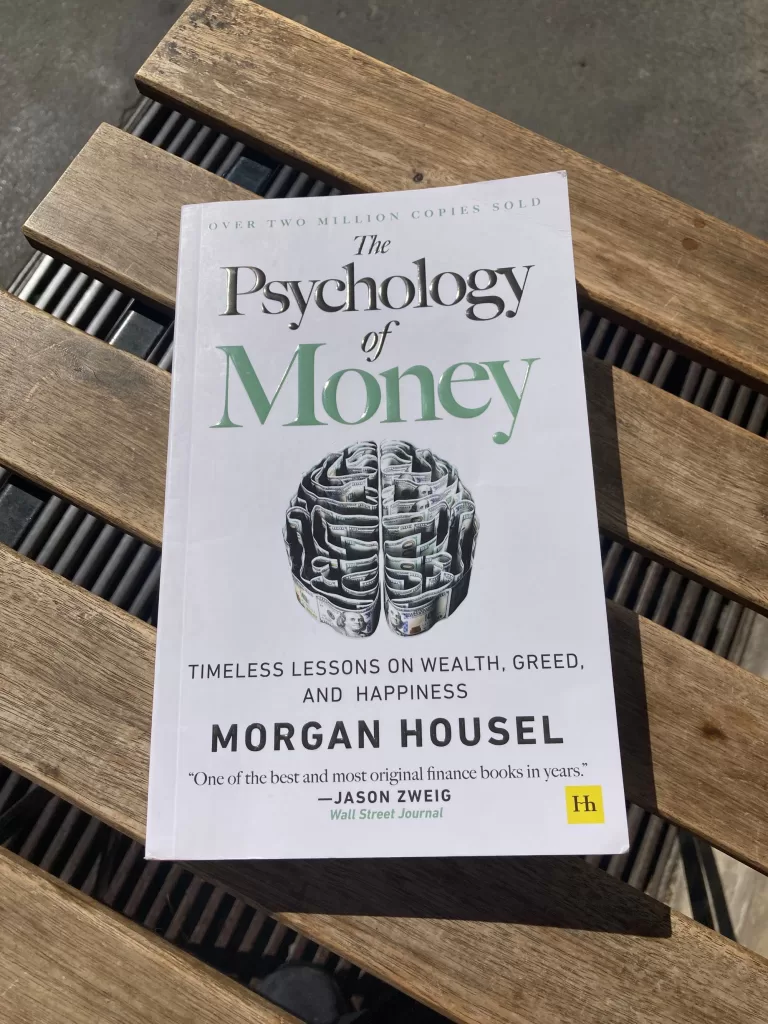
The Psychology of Money by Morgan Housel: Book Summary

What This Book Is About

The Psychology of Money reveals why managing money successfully has less to do with intelligence and more to do with behavior. Morgan Housel, a financial journalist and investor, demonstrates through compelling stories and research that financial success isn’t about what you know—it’s about how you behave.

What You’ll Get From Reading This:

  • Understanding why smart people make terrible financial decisions
  • Insight into how your personal history shapes your money beliefs (often invisibly)
  • The difference between being rich (high income) and being wealthy (financial independence)
  • Why getting wealthy requires different skills than staying wealthy
  • How to think about risk, luck, and long-term compounding
  • Practical strategies for building wealth that align with human psychology
  • Permission to define financial success on your own terms, not society’s

This isn’t a book about stock-picking formulas or get-rich-quick schemes. It’s about the timeless behaviors and mindsets that separate those who build lasting wealth from those who don’t—regardless of income level, intelligence, or education.


PART 1: How We Think About Money (Chapters 1-7)

Your Money Story Shapes Everything

Housel opens with a radical premise: no one is crazy when it comes to money. Your financial decisions make perfect sense given your unique life experiences—but those experiences create blind spots.

Someone who grew up during high inflation sees risk differently than someone who experienced a decade-long bull market. A person who watched their parents lose everything in a business failure will make different choices than someone whose parents built generational wealth through entrepreneurship.

The problem: We assume our experience of the world represents how the world actually works. A 25-year-old who has only known economic growth will take risks a 65-year-old who lived through multiple recessions won’t touch. Neither is “right”—they’re both operating from their personal database of experience.

Key insight: You can’t understand someone’s financial decisions without understanding their personal history. More importantly, you can’t assume your money beliefs are universally applicable.

Continue reading The Psychology of Money by Morgan Housel: Book Summary

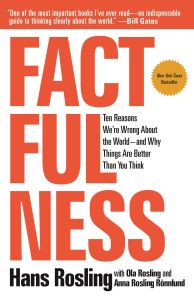
Factfulness : Hans Rosling

factfulnessIn a perfect world, journalists would always present the news in a completely accurate way, and they’d give plenty of relevant context to make it even more impactful. But, unfortunately, we live in the real world, where journalists are in the business of attracting readers, and readers love things to be both super simple and full of drama. As a result, our worldview has become skewed — a poor representation of what the world is really like.

At the heart of our messed up worldview is the belief that people around the planet are worse off than they were before. But this couldn’t be further from the truth. In fact, there’s far less poverty than ever before, people everywhere are living longer and less of the world is being run by sexist and oppressive patriarchies.

This book helps us understand just how much progress has been made, and how we all can learn to overcome the negatives to see our world in a positive, accurate light.

Here are some interesting facts I picked up from the book:
Continue reading Factfulness : Hans Rosling

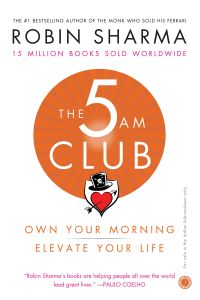
The 5am Club : Robin Sharma

5amclubThe 5am Club is a story about a billionaire who had reached the true elite, achieving epic results in both professional and personal spheres. He was a man who would leave a legacy for the world. But the secret to his success was a surprising one. He attributed his success not to his natural talents, nor to the hours he had invested in his work. He attributed it to a revolutionary morning routine, built around rising at 5 a.m. and following a little known formula designed to turbocharge his mental focus, build his physical fitness and encourage him to be his best self day in and day out.

With this book, you too can join the 5am club. You can learn how to rise each day and embrace the solitude, silence and lack of distraction the early hours of the morning can offer. You’ll learn how true elite performers in all walks of life get ahead by making the most of a time of day that others use to sleep, waste time watching the news, or browse social media.

At the heart of Robin Sharma’s 5am Club, a legendary concept he had created a long long time ago is the 20/20/20 formula that says you use 20 minutes to move, 20 minutes to reflect and 20 minutes to grow. Here is how it works:

Continue reading The 5am Club : Robin Sharma

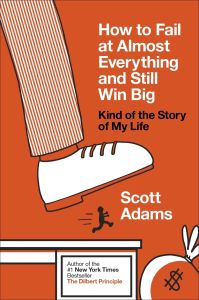
How to Fail at Almost Everything and Still Win Big : Scott Adams

how toThis book is written by Scott Adams, a famous cartoonist and a chronic failure. Before creating Dilbert, his hugely successful comic strip, Adams failed way more often than he succeeded: he got fired countless times, started a business that quickly went under and created a bunch of unsuccessful patents.

But he used all these failures as material for his comics and, in the end, came out on top. If you take a page from his book, you may find that your failures are merely the cobblestones on the path to success.

Continue reading How to Fail at Almost Everything and Still Win Big : Scott Adams

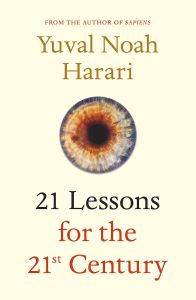
21 Lessons for the 21st Century : Yuval Noah Harari

21This book will help you understand what it will take to futureproof yourself against the twenty-first century.

In an era of relentless change and uncertain futures, governments and individuals alike are grappling with technological, political and social issues unique to the twenty-first century. How should we respond to modern-day phenomena, such as frighteningly intelligent computers, globalization and the fake news epidemic?

In this book, you’ll discover the answer to all these questions and more. You’ll learn how to futureproof your children by changing your approach to education and what robots and automation mean for the future of white-collar work.

Continue reading 21 Lessons for the 21st Century : Yuval Noah Harari

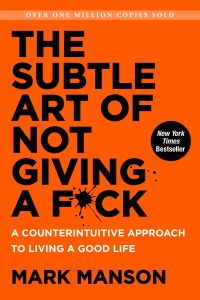
The Subtle Art of Not Giving a F*ck : Mark Manson

subtleThe Subtle Art of Not Giving a F*ck: A Counterintuitive Approach to Living a Good Life is the first book by blogger and author Mark Manson.

Manson’s approach and writing style have been categorized by many as contrarian to the general self-help industry, using blunt honesty and profanity to illustrate his ideas. But the book is profound in its message and perhaps that’s why as of February 18, 2018, it had been on the NY Times best seller list for 60 weeks.
Continue reading The Subtle Art of Not Giving a F*ck : Mark Manson

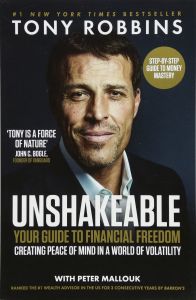
Unshakeable : Tony Robbins

unshakeableSometimes it’s easy to feel like you’re doing a good job with money and finances if you’re able to keep a roof over your head, feed yourself and pay your bills. But what if you want to do more than just survive?

So what can you do to ensure that you can afford to buy a house, send your children to a good college and enjoy a comfortable retirement? We all know it’d be wise to start saving and investing a little bit right now.

Here are some tips Tony Robbins has for us in this book:
Continue reading Unshakeable : Tony Robbins

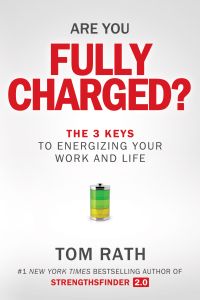
Are you fully charged? : Tom Rath

ruIn his book “Are you fully charged?”, author Tom Rath challenges us to give up the pursuit of happiness and instead focus on creating a life that is full of meaning and positive interactions. Referring to extensive research that he has studied, he explains why focusing on our own happiness often leads us to feeling lonely whereas spending time contributing to happiness of others is what makes life worthwhile and fulfilling.

This is a book about renewing ourselves in the fullest sense. It has the answer to the ultimate question me as a Life Coach and as a human being have – “How to Live?”. If life ever had a set of user manuals that answered that all important question, this would be one of them.

Supercoach : Michael Neill

supercoachSupercoach is a book written by Success Coach Michael Neill, who really is a Super Coach! It’s a fun, easy-to-read book in which Michael Neill shares life changing secrets that will alter the way you look at your situation and your life.

There are various aspects of life he covers in the book, some of them being keys to life-long happiness, getting rid of victim-like thinking and strategies for increasing productivity, energy and well-being.

The biggest thing I got from this book was the secret to financial security irrespective of whether the economy is in boom or in recession. This is the secret that has helped me sustain and grow my practice despite the economic uncertainties I have seen worldwide since 2009.

Getting Things Done : David Allen

getting-things-done“Anxiety is caused by a lack of control, organization, preparation and action.” – David Kekich

This book by David Allen is considered a masterpiece in productivity improvement and a bible in productivity as far as I am concerned.

He starts by analyzing the typical challenges corporate employees face today :
• Overwhelming number of things to do
• A constant dilemma – What to do, When to do, How to do
• Day to day fire-fighting
• High levels of anxiety
• A feeling of too much to handle, not enough time to get it done
• More stress despite better workplaces and quality of life
• Fast paced changing nature of their jobs themselves
• The pressure of Multi-Tasking and the risk of errors and efficiency loss that comes with it.
Continue reading Getting Things Done : David Allen

The Secret : Rhonda Byrne

secretIt’s been 9 years since the inspirational film “The Secret” and the book with the same title were released. The concepts from this internationally best-selling book (it was on the New York Times bestsellers list for 42 consecutive weeks and has sold more than 21 million copies!) have been accepted and adopted by millions of people worldwide.

Although the book seems have to been influenced by a number of earlier books that have been classics on the concept of positive thinking, what is great about “The Secret” is that it has packaged positive thinking as a Law – The Law of Attraction.
Continue reading The Secret : Rhonda Byrne

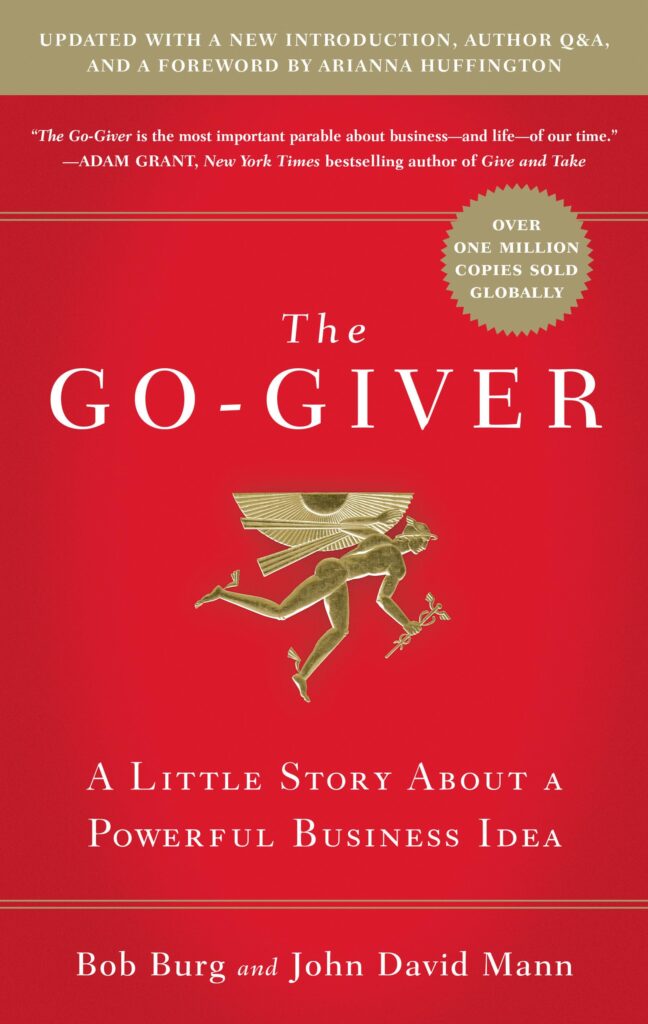
The Go-Giver : Bob Burg and John David Mann

go giverThe Go-Giver has undoubtedly been one of the most influential books I have read.

The Go-Giver as the authors tell, revolves around the story of a young professional (Joe) who is striving for success. Joe is ambitious, however lately it seems like his hard work and efforts are not paying off in terms of results. Following a disappointing quarter—in terms of sales results—he inadvertently seeks the mentorship of The Chairman.

Joe then embarks on a learning journey by meeting Go-Givers—friends of The Chairman. Through these interactions he learns of the Five Laws of Stratospheric Success:
Continue reading The Go-Giver : Bob Burg and John David Mann